
| Clinical Takeaway | ||||||||||||||||||
|
| Sponsored · Newsletter brought to you by MicroVitamin+ | |||||
| 3 tubs, 1 scoop. | |||||
| |||||
| ↓ | |||||
| |||||
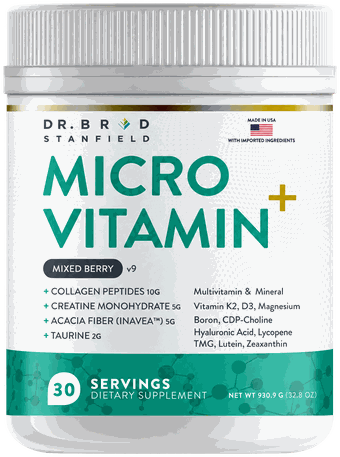
| A lot of people end up with a multivitamin, a tub of creatine and a tub of collagen on the shelf. MicroVitamin+ puts them in one scoop, and it's cheaper than buying them separately. | |||||
| Get 10% off your first order → | |||||
| Use code DRMIKE at checkout. | |||||
| I earn a commission on purchases made through this link or code. These statements have not been evaluated by the Food and Drug Administration. This product is not intended to diagnose, treat, cure, or prevent any disease. |
Some of Sylvie Stacy’s patients still pour themselves a drink. What’s changed, she told Medscape, is how often they leave it unfinished.2 Stacy is an addiction medicine physician, and these patients are taking GLP-1 medications.
Jason Kirby, DO, chief medical officer at Recovery Centers of America, put it this way: the drug “dims the light a little bit. It doesn’t turn the light off.”2
The second sentence is the part the headlines skip. First it was food noise, the running mental chatter about eating that many patients describe going quiet on these drugs, and I’ve written about how the popular version of that idea undersells the neuroscience. Now the question is whether alcohol has its own noise, and whether the same drugs can turn it down.
The evidence has moved fast. This year alone, 2 randomized trials of semaglutide were published, a trial of a newer drug was reported at a conference this month, and a national survey put the question to patients directly. Here is what they show, what they don’t, and the safety problem that can follow a sharp drop in drinking.
What patients are reporting
Lori Uscher-Pines of Brown University and colleagues surveyed 2,009 adults in the RAND American Life Panel, a nationally representative US panel, in March and April, and published the results as a research letter in JAMA Psychiatry on October 14.1 Of those 2,009, 368 had ever used a GLP-1. Of the 242 people who drank when they started a GLP-1, 44.2% recalled drinking less in the first 3 months. Just over half, 52.6%, reported no change.
| JAMA Psychiatry · 2026 · 242 people drinking when they started a GLP-1 | |||
| |||
| Survey-weighted change in drinking over the first 3 months on a GLP-1, self-reported and recalled. No comparison group. |
The signal was stronger where it matters most. Among respondents who screened positive for potentially unhealthy drinking, meaning at least 1 heavy-drinking day in the prior year, 54.1% said they drank less, and their adjusted odds of reporting less drinking were 2.3 times those of the other drinkers surveyed (95% CI 1.20 to 4.42).1
A survey tells you what people noticed, not whether the drug caused it, and I’ll come back to its limits. What it does tell you is what your patients may already be experiencing before anyone asks.
| The core claimGLP-1s appear to turn alcohol craving down, not off. The best trial evidence shows fewer heavy-drinking days on top of therapy, not abstinence, which makes alcohol a question to ask before every first dose and not yet a reason to prescribe. |
What the randomized trials show
Self-report is a starting point. To know whether the drug is doing the work, you need a placebo arm, and 4 published trials have now tested exenatide or semaglutide against placebo in people with alcohol use disorder. (Disclosure: I provide research consulting to Novo Nordisk, which makes semaglutide.)
| 4 published trials of exenatide or semaglutide in alcohol use disorder | ||||||||
| 2 met their primary endpoint. 2 did not. | ||||||||
| Each trial's primary outcome, and whether it was met | ||||||||
| ||||||||
| All are small trials. “Not met” refers to the primary endpoint only. The oral trial’s drop in heavy-drinking days was a prespecified secondary finding; the exenatide trial improved no drinking outcome, though brain imaging changed. |
At the AASLD Liver Meeting in November, investigators reported a fifth trial, not yet published: about 100 adults with moderate to severe alcohol use disorder and a BMI of 25 or higher were randomized to pemvidutide, a dual glucagon/GLP-1 agonist, or placebo.7 At 24 weeks, the difference favored pemvidutide by 1.45 heavy-drinking days per week (95% CI 0.58 to 2.32).
The first trial was a miss. In 2022, a group in Copenhagen randomized 127 people seeking treatment for alcohol use disorder to weekly exenatide or placebo for 26 weeks, on top of cognitive behavioral therapy.3 Heavy-drinking days fell sharply in both arms, with no difference between them, but 2 findings kept the idea alive. Brain scans showed a weaker response to alcohol cues in the ventral striatum, a reward hub, in the exenatide group. And an exploratory analysis found the benefit concentrated in people with obesity: with a BMI above 30, exenatide cut heavy-drinking days by 23.6 percentage points more than placebo, while with a BMI under 25, heavy-drinking days rose 27.5 points relative to placebo, though total alcohol intake in that group didn’t differ.3
The second trial asked a narrower question. Christian Hendershot and colleagues randomized 48 adults with alcohol use disorder who weren’t seeking treatment to low-dose semaglutide or placebo for 9 weeks.4 The primary outcome was a laboratory session in which participants could choose how much to drink, and on semaglutide they drank less and reached lower peak breath alcohol, tested at a dose of just 0.5 mg a week. Day to day, semaglutide reduced drinks per drinking day and weekly craving, but it didn’t change the number of days people drank or their average drinks per day.
The strongest result so far
The third trial came from the same Copenhagen group, and this time they enrolled only people with obesity: 108 treatment-seeking adults with moderate to severe alcohol use disorder, randomized to semaglutide 2.4 mg or placebo for 26 weeks, with cognitive behavioral therapy in both arms.5 The share of days spent drinking heavily fell 41.1 percentage points on semaglutide and 26.4 points on placebo.
| The Lancet · 2026 · 108 adults with alcohol use disorder and obesity · 26 weeks | ||||
| Both groups improved. Semaglutide added more. | ||||
| Reduction in heavy-drinking days from baseline, percentage points | ||||
Placebo · plus therapy
| ||||
| Adjusted difference between groups 13.7 percentage points (95% CI 5.4 to 22.0), smaller than the raw gap between the bars. 81% of participants completed the full 26 weeks. |
Look at the placebo bar first. Both groups were offered cognitive behavioral therapy. By week 26, the adjusted difference worked out to about 4 fewer heavy-drinking days per 30 days with semaglutide.5 Both groups improved, but this design can’t tell us how much of the placebo group’s improvement came from therapy. Side effects were mostly transient, mild to moderate gastrointestinal symptoms, more common on the drug.
The fourth trial, published in July, missed its primary endpoint. Researchers at the University of Colorado randomized 50 treatment-seeking adults with moderate to severe alcohol use disorder to oral semaglutide (3 mg daily, then 7 mg) or placebo for 8 weeks.6 Craving in response to alcohol cues in the lab, the primary measure, didn’t differ between groups. Its reduction in heavy-drinking days was a prespecified secondary finding.
Read across the 3 semaglutide trials and a pattern shows up. The consistent signal isn’t abstinence. It’s less craving, fewer drinks once drinking starts, and fewer heavy days, mostly on secondary and exploratory outcomes, and addiction medicine counts that kind of reduction as a real result.
| Free downloadWant the obesity trials behind these drugs on one page? The GLP-1 Evidence Cheat Sheet puts 12 of them side by side. | |
|
Why a weight drug would touch drinking
GLP-1 receptors aren’t only in the gut and pancreas. They sit in brain circuits that handle reward and motivation, and in rodents and nonhuman primates, GLP-1 drugs reduce alcohol intake and relapse-like drinking.3 The exenatide trial’s imaging is the clearest human hint so far, with alcohol cues provoking a weaker response in the ventral striatum on the drug.3 It’s the same family of effects patients describe with food: less pull, less anticipation, a craving that doesn’t build. Whether that is the mechanism behind the drinking changes is still a hypothesis.
The withdrawal problem nobody planned for
Stacy described a man who was having about 12 drinks a day when she started him on naltrexone.2 Around the same time, his primary care physician prescribed a GLP-1 for weight loss. He found alcohol repulsive, cut back quickly to 4 or 5 drinks a day, and needed urgent care for withdrawal symptoms.
Each prescription made sense on its own, and because both started around the same time, the case can’t say which drug did what. What it illustrates is what a sharp reduction can do in someone with physical dependence. A fall from 12 drinks a day to 4 can be enough to set off withdrawal, which can include seizures.8
Timing matters too. The survey’s changes came in the first 3 months, and the 2025 trial saw less lab drinking at 0.5 mg, a starting-range dose. My read, which no trial has tested, is that if craving drops, it may drop during titration, before anyone thinks of the drug as fully on board.
| Before the first dose | ||||||||||||
|
If you’re the one taking the medication: if you drink heavily every day or have had withdrawal before, talk with your clinician before making a sharp cut. If your drinking has already dropped and you develop shaking or sweating, seek medical advice that day. A seizure, hallucinations, or severe confusion warrants emergency care.8
The honest ledger
Start with the survey. It’s self-reported, people recalled 3 months of drinking, and there was no comparison group, so recall bias, the pull to give a good answer, and plain regression to the mean all fit inside that 44%. People who start a GLP-1 are also often changing several habits at once.
The trials are small and short: 48 to 127 people, followed for 8 to 26 weeks. The one clear positive on heavy drinking enrolled only people with obesity who were seeking treatment and getting therapy. The exenatide subgroup hinted that lean drinkers might respond differently, but neither semaglutide trial that tested BMI found it changed the effect, though the oral trial enrolled only people with overweight or obesity.4,6 And in the oral trial, more placebo participants correctly guessed their assignment, a reminder that blinding is hard when everyone knows what these drugs feel like.6
Large observational studies mostly point the same direction. In a Swedish cohort of nearly 228,000 people with alcohol use disorder, periods on semaglutide carried a 36% lower risk of hospitalization for alcohol use disorder than periods off it, in the same people.12 But observational data cut both ways. In the Cooper Center cohort, GLP-1 users cut back by about 1 drink a week more than nonusers, a difference that lost significance once weight change was accounted for.13 In the oral trial, heavy drinking fell even though weight loss didn’t differ significantly between groups.6 How much of the change in drinking is explained by weight loss is still open. And in Stockholm, lower rates of hospitalization for alcohol use disorder were detectable during the first 6 months after people stopped a GLP-1; the estimate for months 7 to 12 was inconclusive.14
None of this amounts to FDA approval: no GLP-1 is approved to treat alcohol use disorder. The approved medications, led by naltrexone and acamprosate, rest on far more evidence: a 2023 meta-analysis of 118 trials and nearly 21,000 participants supports both as first-line treatment alongside psychosocial care, with oral naltrexone at 50 mg a day preventing 1 return to heavy drinking for every 11 people treated.10 Both are generic. In 2025, only 2.6% of people in the US with alcohol use disorder received medication for it.15 That gap is a bigger problem than anything in this article.
| What would change my mind | ||||||
| ||||||
| None of the phase 3 trials are expected to report before 2028. I’ll update this when they do. |
| Speculation · extrapolation beyond the data |
| Where I’d look first: after gastric bypass. This part is extrapolation, not evidence. Bariatric surgery has a well-documented alcohol problem. In the LABS-2 cohort, alcohol use disorder symptoms rose from 7.6% of patients before surgery to 9.6% in the second year after it, and gastric bypass carried about twice the odds of the adjustable band.19 In a 2025 analysis of patients who started an obesity medication after bariatric surgery (3,990 propensity-matched pairs drawn from more than 15,000), those on an incretin-based drug had a 55% lower hazard of new alcohol use disorder than those on other obesity medications.20 If these drugs quiet the reward signal that alcohol exploits, the patient after gastric bypass is where I’d expect it to matter most. I’d like to know whether starting one of these medications after gastric bypass could prevent a new alcohol use disorder. Yale has a small randomized pilot of semaglutide in people who already have alcohol use disorder after surgery.21 Prevention is a different question. |
The bottom line
This is one of the most interesting open questions in obesity medicine, and it is still open. The biology is plausible, the patient reports are consistent, and 2 of the 4 published trials met their primary endpoints. What we don’t have yet is a large, long trial in people whose primary problem is alcohol, and those are underway.
If you’re taking a GLP-1 for a reason it’s approved for and the drink gets quieter, that’s a real, reported effect worth telling your doctor about, especially if you drink every day. I wouldn’t start a GLP-1 for drinking alone on this evidence. But before I prescribe one for obesity, I want to know how much the patient drinks and what happens when they skip a day.
Talk it over. Every issue gets its own thread in the Substance Over Noise community, a free discussion room for readers. Tell me what you’re seeing there, or just reply to this email.
| Join the conversation → |
| The history that matters before a GLP-1 includes the drinking history, because what these drugs change isn’t only appetite. At Vineyard, our clinicians treat obesity as the chronic disease it is. See how Vineyard approaches obesity care → |
Disclosure: The author is Chief Medical Officer of Vineyard, a telehealth obesity medicine practice. He is a consultant to Viking Therapeutics and provides research consulting to Novo Nordisk, which makes semaglutide (Wegovy, Ozempic, Rybelsus), the drug studied in 3 of the 4 trials discussed here. The Lancet trial was funded in part by the Novo Nordisk Foundation. This issue includes a paid sponsorship for MicroVitamin+, and the author earns a commission on purchases made through its link or code. No GLP-1 medication is approved by the FDA to treat alcohol use disorder. This article is educational and is not individualized medical advice. Talk with your own clinician before making changes to your care.
REFERENCES
1. Uscher-Pines L, Sousa J, Busch AB, Mehrotra A, Muzyk A, Hodgkin D, et al. Patient-reported changes in alcohol use following glucagon-like peptide-1 receptor agonist initiation. JAMA Psychiatry. Published online 2026 Oct 14. doi:10.1001/jamapsychiatry.2026.3242
2. Koenig D. GLP-1s and alcohol use: what clinicians are seeing in practice. Medscape Medical News [Internet]. 2026 Oct 28 [cited 2026 Nov 22]. Available from: medscape.com
3. Klausen MK, Jensen ME, Møller M, Le Dous N, Jensen AØ, Zeeman VA, et al. Exenatide once weekly for alcohol use disorder investigated in a randomized, placebo-controlled clinical trial. JCI Insight. 2022;7(19):e159863. doi:10.1172/jci.insight.159863
4. Hendershot CS, Bremmer MP, Paladino MB, Kostantinis G, Gilmore TA, Sullivan NR, et al. Once-weekly semaglutide in adults with alcohol use disorder: a randomized clinical trial. JAMA Psychiatry. 2025;82(4):395-405. doi:10.1001/jamapsychiatry.2024.4789
5. Klausen MK, Justesen SK, Pedersen JN, Rasmussen L, Jensen A, Jensen ME, et al. Once-weekly semaglutide versus placebo in patients with alcohol use disorder and comorbid obesity: a randomised, double-blind, placebo-controlled trial. Lancet. 2026;407(10540):1687-98. doi:10.1016/S0140-6736(26)00305-3
6. Schacht JP, Sakai JT, Raymond K, Shelton R. Oral semaglutide for alcohol use disorder: a randomized clinical trial. Am J Psychiatry. 2026;183(9):636-45. doi:10.1176/appi.ajp.20260003
7. Kranzler HR, et al. Efficacy and safety of pemvidutide in the treatment of adults with alcohol use disorder: results from RECLAIM, a 24-week phase 2 randomized, double-blind, placebo-controlled trial [late-breaking abstract 5013]. Presented at: AASLD The Liver Meeting; 2026 Nov 9; Denver, CO. Conference result, not yet peer reviewed. [VERIFY abstract number, title and confidence interval against the AASLD abstract.] Company summary: Altimmune news release, 2026 Nov 9. Available from: globenewswire.com
8. The ASAM clinical practice guideline on alcohol withdrawal management. J Addict Med. 2020;14(3S Suppl 1):1-72. doi:10.1097/ADM.0000000000000668
9. Contrave (naltrexone hydrochloride and bupropion hydrochloride) extended-release tablets: prescribing information [Internet]. Silver Spring (MD): US Food and Drug Administration; 2025 [cited 2026 Nov 1]. Sections 2 and 4. Available from: accessdata.fda.gov
10. McPheeters M, O'Connor EA, Riley S, Kennedy SM, Voisin C, Kuznacic K, et al. Pharmacotherapy for alcohol use disorder: a systematic review and meta-analysis. JAMA. 2023;330(17):1653-65. doi:10.1001/jama.2023.19761
11. Wegovy (semaglutide) injection and tablets: prescribing information [Internet]. Bethesda (MD): National Library of Medicine (US), DailyMed; updated 2026 Jun 18 [cited 2026 Nov 1]. Section 5.2, Acute pancreatitis. Available from: dailymed.nlm.nih.gov
12. Lähteenvuo M, Tiihonen J, Solismaa A, Tanskanen A, Mittendorfer-Rutz E, Taipale H. Repurposing semaglutide and liraglutide for alcohol use disorder. JAMA Psychiatry. 2025;82(1):94-8. doi:10.1001/jamapsychiatry.2024.3599
13. Basri T, Shea SJ, Brantley A, Tharoor R, Chavez J, Khan M, et al. Alcohol use following GLP-1 receptor agonist therapy in the Cooper Center Longitudinal Study. Mayo Clin Proc. Published online 2026 Jul 22. doi:10.1016/j.mayocp.2026.07.014
14. Bach P, Franck J, Hällgren J, Widing H, Gissler M, Westman J. Association of GLP-1 receptor agonists with alcohol use disorder-related and substance use disorder-related hospital admissions during treatment and after discontinuation: a Swedish register-based within-individual observational study. Lancet Psychiatry. 2026;13(8):669-77. doi:10.1016/S2215-0366(26)00172-0
15. Substance Abuse and Mental Health Services Administration. Key substance use and mental health indicators in the United States: results from the 2025 National Survey on Drug Use and Health [Internet]. Rockville (MD): SAMHSA; 2026 Jul [cited 2026 Nov 22]. Available from: samhsa.gov
16. Eli Lilly and Company. A study of brenipatide in participants with moderate-to-severe alcohol use disorder (RENEW-ALC-1). ClinicalTrials.gov identifier: NCT07219966 [Internet]. Bethesda (MD): National Library of Medicine (US); 2025 [cited 2026 Nov 22]. Available from: clinicaltrials.gov
17. Eli Lilly and Company. A study of brenipatide in participants with alcohol use disorder (RENEW-ALC-2). ClinicalTrials.gov identifier: NCT07219953 [Internet]. Bethesda (MD): National Library of Medicine (US); 2025 [cited 2026 Nov 22]. Available from: clinicaltrials.gov
18. VA Office of Research and Development. Cessation or reduction of alcohol consumption in veterans: a randomized controlled trial for alcohol use disorder (CRAVE). ClinicalTrials.gov identifier: NCT07218354 [Internet]. Bethesda (MD): National Library of Medicine (US); 2025 [cited 2026 Nov 1]. Available from: clinicaltrials.gov
19. King WC, Chen JY, Mitchell JE, Kalarchian MA, Steffen KJ, Engel SG, et al. Prevalence of alcohol use disorders before and after bariatric surgery. JAMA. 2012;307(23):2516-25. doi:10.1001/jama.2012.6147
20. Fakhoury B, Sierra L, Rama K, Jahagirdar V, Díaz LA, Arab JP. Incretin-based therapies and post-bariatric surgery alcohol use disorder. JAMA Netw Open. 2025;8(12):e2549086. doi:10.1001/jamanetworkopen.2025.49086
21. Yale University. Semaglutide (SEMA) for alcohol use disorder (AUD) after metabolic and bariatric surgery (MBS). ClinicalTrials.gov identifier: NCT07223983 [Internet]. Bethesda (MD): National Library of Medicine (US); 2025 [cited 2026 Nov 22]. Available from: clinicaltrials.gov
Evidence-based obesity medicine, twice a week. No hype, no telehealth grifts.